Common Relationship Challenges
-
Communication challenges
-

Trauma in relationships
-

Managing conflicts
-

Show appreciation and love
-

Sex and intimacy challenges
-
Parenting conflicts
-

Reconnect and repair
-

Strengthening relationship
-

Managing conflicts with in-laws
How I Can Help
As a first-generation immigrant, my expertise is working with first generation and second-generation Asian American couples and biracial/interracial couples on dealing with cultural differences and ways to strengthen their relationships.
Expressing love and affection which was not taught or modeled for us as children by our caregivers. In couples therapy, we explore deeply as a couple on our cultural beliefs, assumptions or fears that are connected to our behaviors and these unintentional behaviors could be the challenges with building and maintaining romantic relationships. Through couples therapy, we can work together on finding ways to reshape generational beliefs that get in the way of creating intimacy.
Couples therapy/counseling can help build stronger relationships. You will learn how to manage conflict, how to better communicate with each other. I often share with my clients that the words you use and the tone of voice when you share change everything! Please feel free to reach out and schedule your free consultation call.
Therapeutic Approaches
-

Gottman Method
The Gottman Method is a research-based couples therapy built on decades of studying how couples interact, most famously identifying the "Four Horsemen" — criticism, contempt, defensiveness, and stonewalling — as the top predictors of relationship breakdown. It emphasizes building friendship and fondness (through "love maps" and turning toward each other's bids for connection), while treating many conflicts as perpetual and unsolvable, aiming to manage them with respect rather than eliminate them entirely.
-
Dialectical Behavioral Therapy
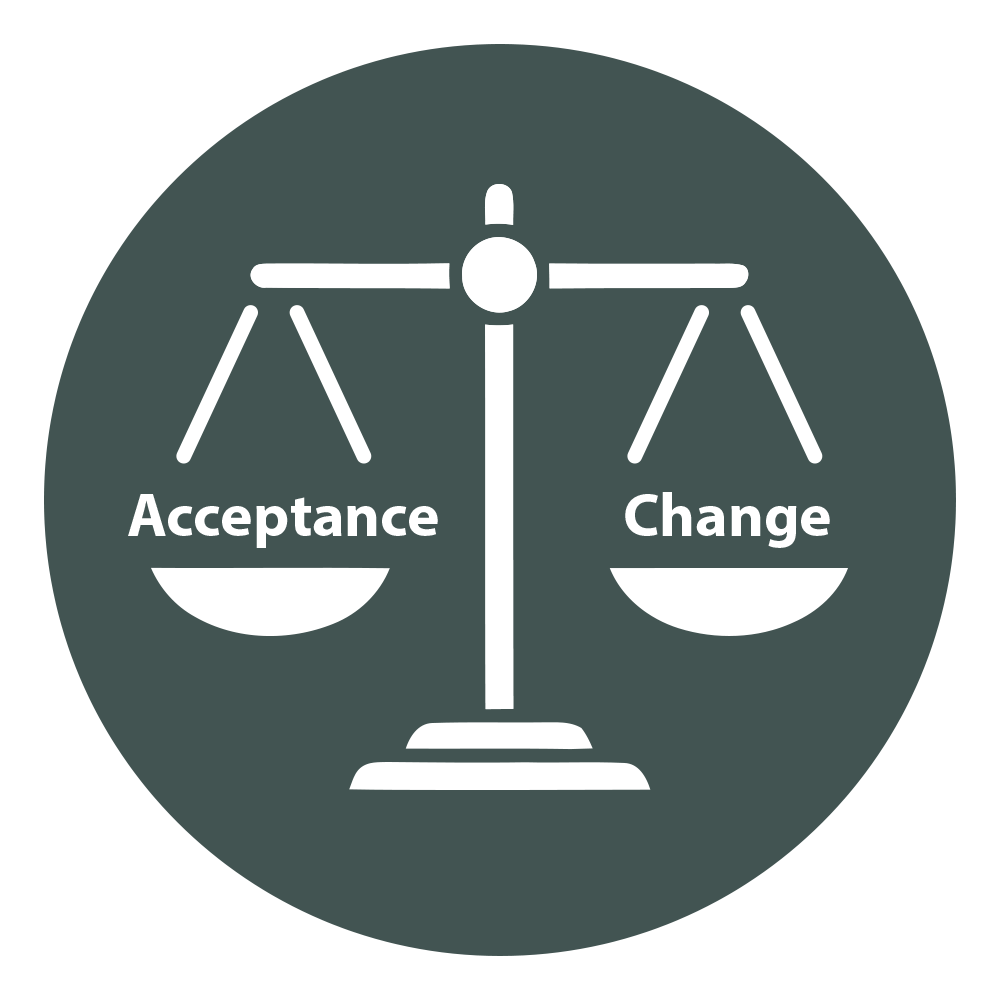
DBT (Dialectical Behavior Therapy) was originally developed for chronic suicidality and borderline personality disorder, though it's now used more broadly for emotion dysregulation. It's built on a "dialectic" — holding acceptance and change together at the same time, rather than one or the other.
-

Solution-Focused (Brief) Therapy
often called SFBT — was developed by Steve de Shazer and Insoo Kim Berg at the Brief Family Therapy Center in Milwaukee in the 1980s. It's about as different from EFT as you can get within the therapy world: instead of exploring the origin or depth of a problem, SFBT deliberately minimizes problem-talk and concentrates almost entirely on the client's existing strengths, exceptions, and desired future.
-

Emotion-Focused Therapy (EFT)
EFT is an evidence-based, humanistic approach developed primarily by Leslie Greenberg (and Sue Johnson's EFT for couples is a related but distinct branch).
-

Trauma-Informed Care (TIC)
it's not a specific modality with its own techniques, but rather an organizing framework/lens that can (and should) underlie any modality a clinician uses.The defining move of TIC is changing the guiding question from "What's wrong with you?" to "What happened to you?" This reframes symptoms — reactivity, avoidance, dissociation, difficulty trusting, hypervigilance — not as pathology or dysfunction, but as adaptations that made sense given what a person survived.